Stefanie Conradt, The ‘Reflecting Together’ project: Loneliness and isolation experienced by older people in South Tyneside
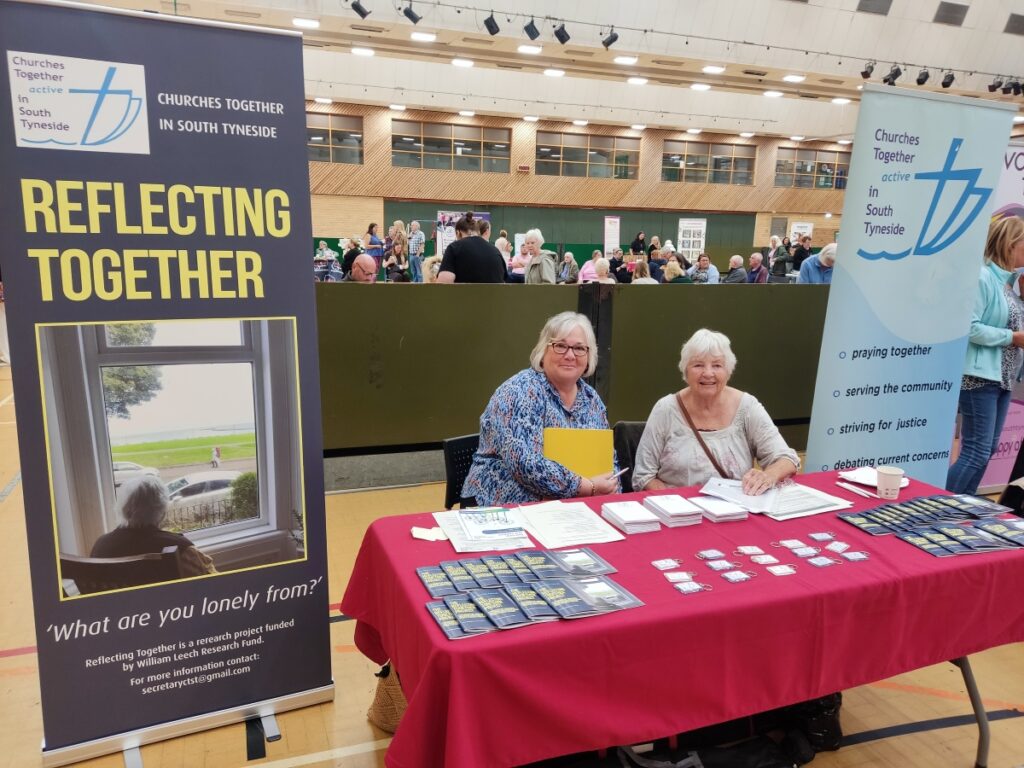
Stefanie Conradt has recently completed a fellowship undertaking a 12-month full time participatory research project in South Tyneside. Working together with the charity Churches Together South Tyneside (CTST), the team and Stefanie sought to understand how loneliness and isolation is experienced by the community’s older members. For that purpose, Stefanie worked with the staff and volunteers of two projects offered by CTST. By reflecting together on what is offered by the beneficiaries and local parishioners, the project sought to create a more connected and supportive environment, as well as new ways of engagement for CTST. By including different groups in this theological reflection process, this project has shared distinct voices relating to loneliness of older people from the deprived region of South Tyneside. The project’s goal has been to impact on the priorities and ways of working of the groups and services involved, so that the social and individual dimensions of isolation and loneliness are addressed. A short video that shares findings from the project is available on YouTube . There is a booklet for churches that accompanies this video, which can be downloaded here . The full project research report is also available to download for free from this link and an open-access journal article based on the project has now been published in the Practical Theology journal . For further details, the project website is available here .
Friendship, Faith, and Flourishing: How do friendship and faith interact and impact the wellbeing of practising ‘Millennial’ Christians in North East?
Ruth Perrin built on her earlier William Leech Research Fund-sponsored research into the faith development of Millennial Christians in the region (published as: Changing Shape: The Faith Lives of Millennials, SCM 2020). Her latest, recently-completed mixed-mode project explored the intersection of friendship and faith in their current life stage, with a view to understanding how friendship influences spiritual wellbeing and impacts the ways in which 30-something Christians live out their beliefs across the Northeast. Ruth’s fellowship was based with St John’s College, Durham University, and is ran part time from December 2023 to November 2025. The findings from this project are now available on this website: ‘Resilient Faith: The Lives of Millennial Christians in the North East’
Recovery from Moral Injury across the North East of England and Beyond: Researching and refining the theological tools available to chaplains
Brian Powers led this project that asked important questions about the tools that chaplains, clergy and religious personnel can use to attend to moral injury in a UK context, particularly the North East of England. Specifically, it explored what are the resources – the rituals, scriptural traditions, theological concepts, frameworks of meaning and experiences – which a chaplain or clergy member may employ in order to engage with moral injury in British military veterans that will help facilitate recovery. The project involved a series of interviews and sought to develop a set of resources for chaplains, clergy and other practitioners, with the ultimate aim of improving mental health for morally-injured people in the UK. It ran for 12 months full time from September 2024 to August 2025, based at the International Centre for Moral Injury – Durham University . To hear more about the findings from this project, listen here to a recent webinar now on Youtube; written publications from this project will follow shortly.
Earlier Fellows
A document detailing earlier completed fellowships is available here.
Note: All publications produced during Leech Fellowships are the work and responsibility of their respective authors; any links to work or wider webpages given above does not necessarily imply agreement by the Leech Research Fund with their contents.